Category: Uncategorized

  • Business Drivers in Financial Modeling

    Business Drivers in Financial Modeling

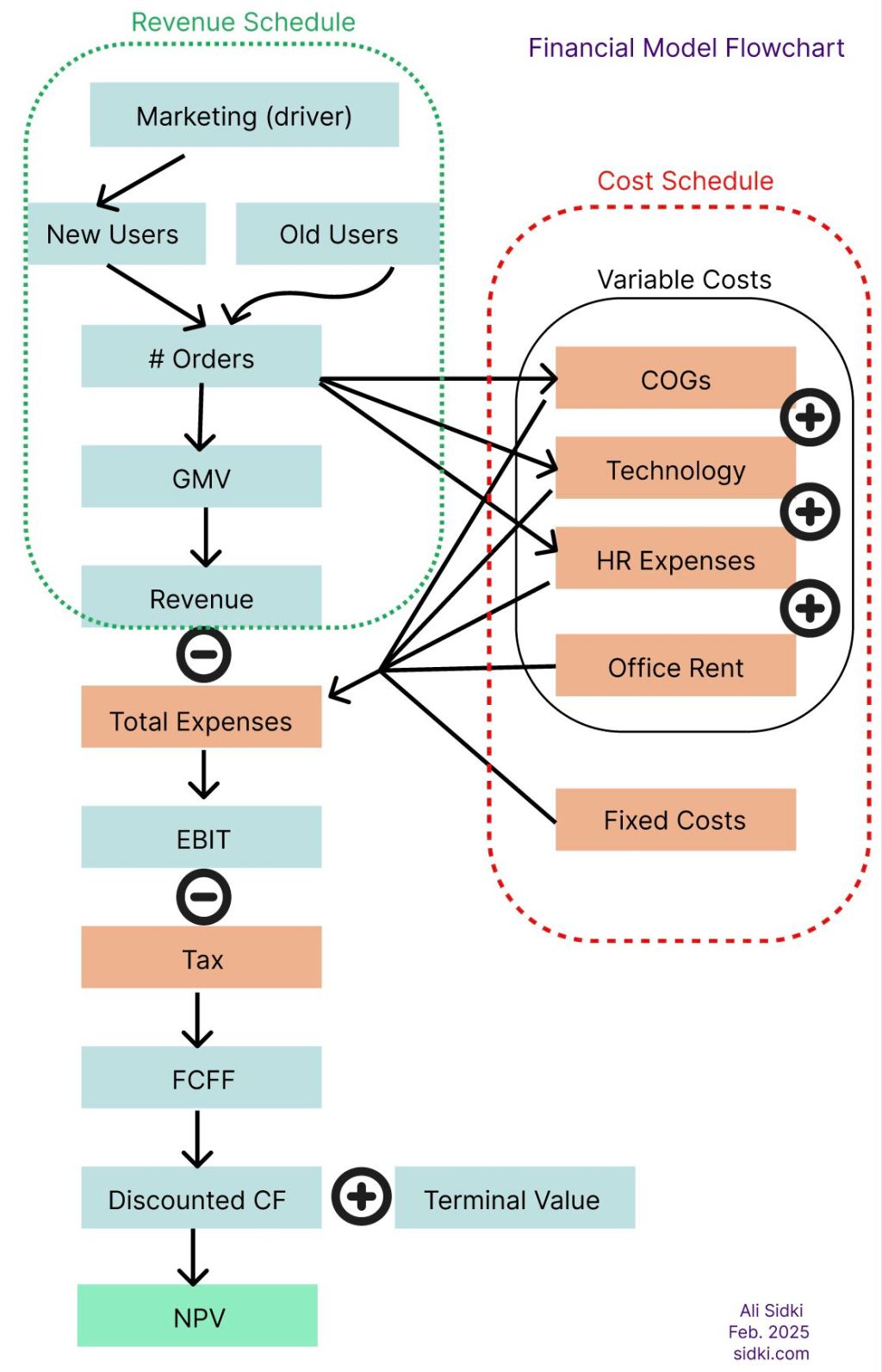
    🎯 Just wrapped up a fascinating startup valuation (post commercialization stage) where marketing spend emerged as the crucial revenue driver.

    Here’s what caught my attention:

    • Direct correlation between marketing budget and customer acquisition

    • Clear impact on revenue growth trajectory

    • Scalable and measurable metrics that investors love

    Instead of traditional metrics like store/branch count or salesforce size, digital-first startups often show stronger ties between marketing spend and revenue generation.

    🎯 The multiplier effect was impressive: $1 in marketing → $4 in revenue (12-month period)

    💡 Key learning: Identifying the right business drivers isn’t just about following industry standards – it’s about understanding what truly moves the needle for YOUR specific business model.

    💭 What’s the most unexpected business driver you’ve encountered in your valuations? Drop your experiences below!

    #Startups #Valuation #FinancialModeling

    #Entrepreneurship #BusinessDevelopment #Investment #PitchingTips #BusinessStrategy #CorporateDevelopment #VentureCapital #StartupGrowth #StartupAdvice
  • How to Write a Better Cold Email

    How to Write a Better Cold Email

    A year ago in Jan 2024, Redstone a Berlin-based vc received a cold email inviting them to invest in DeepSeek, they ignored it!

    To be fair the email was generic and unappealing, VCs receive 100s of such emails,

    Few improvements would have made this email much more compelling.

    How to Write a Better Cold Email:

    ✅ Subject: Highlight strongest points “DeepSeek – Backed by [VC Firm], Growing 5X Faster”

    ✅ Personalized Opening: The name of the person, or show information that demonstrates you did your own research “You backing the startups [startup names] show your interest in AI-first startups ”

    ✅ Value Proposition: What makes you unique “DeepSeek is China’s fastest-growing AI search startup, securing [funding] and scaling [growth stat].”

    ✅ Call to Action: A reasonable and clear action, not asking for a lunch meeting but a short online meeting is enough “Would love to share why top investors are betting on this—10 min this week?”

    💡 Pro tip: use the inverted pyramid method in writing emails,

    1. Grabbing attention (Most important info)

    2. Important details

    3. General details

    4. Call to Action

    Cold emails don’t fail because they’re cold. They fail because they’re bad.

    Good emails will not get you funding or the objective you want but they will spark interest and you can continue the conversation.

    Bad emails will get you ignored!

    ⁉️ In your experience, what are good tips for writing an effective email? Share in the comments

    Feel free to share this post with your network.

    #Entrepreneurship #BusinessDevelopment #Investment #PitchingTips #BusinessStrategy #CorporateDevelopment #VentureCapital #StartupGrowth #StartupAdvice

  • Problem Statement Disaster

    Problem Statement Disaster

    A solution to no problem?

    I was in a discussion with an investor the other day at an event, when a founder approached him. The founder eagerly asked to pitch his business idea, and the investor even hinted “Give me your elevator pitch”

    But what followed was… puzzling.

    The founder launched straight into their AI-powered, cutting-edge solution—buzzwords flying left and right. Yet, when they finished, both the investor and I were left wondering:

    What problem is this solving?

    After an awkward pause, The investor had to explicitly ask, “Why exactly will your planned customers need your services?” This was a clear indication that the founder had missed the most crucial part of his pitch.

    This awkward encounter highlighted a common pitfall in startup pitches, but I believe a little preparation goes a long way. Let me share the fundamentals of crafting a compelling problem statement.

    A well-crafted problem statement makes all the difference. Here’s how to get it right:

    ✅ Start with the pain point â€“ What real challenge are your target customers facing? Is it costing them money, time, or peace of mind?

    ✅ Quantify the impact â€“ Use hard data or real examples. Saying, â€œBusinesses lose $X million annually due to this inefficiency” is far more compelling than â€œBusinesses struggle with this issue.”

    ✅ Show the ripple effect â€“ A great problem statement highlights both direct and indirect consequences. How does this issue disrupt broader workflows, profits, or customer satisfaction?

    ✅ Validate market demand â€“ Prove that the problem is widespread. Market research, customer interviews, and industry trends all help build credibility.

    ✅ Explain why now â€“ Timing is everything. What shift—technological, regulatory, or cultural—makes this problem urgent to solve today?

    Investors Don’t Invest in Solutions—They Invest in Problems

    Your AI-powered platform, your proprietary tech stack—all of that should support your problem-solving approach, not be the centerpiece of your pitch.

    As one successful founder once said:

    💡 â€œFall in love with the problem, not your solution.”

    What are your thoughts on problem statements? Have you seen (or made) this mistake in pitch meetings?

    Feel free to share this post with your network.

    #Entrepreneurship #BusinessDevelopment #Investment #PitchingTips #BusinessStrategy #CorporateDevelopment #VentureCapital #StartupGrowth #StartupAdvice