Blog

  • Is Cash Really King, or Just a Friendly Face Hiding Bigger Problems? The Startup Funding Myth I See All Too Often.

    Is Cash Really King, or Just a Friendly Face Hiding Bigger Problems? The Startup Funding Myth I See All Too Often.

    “Ali, if we could just land another $300k, I swear, all our headaches would vanish.”

    I nodded, listening. It’s a conversation I’ve had countless times, in different cities, with founders from all walks of life. We’ll call this particular founder Adam. He had that spark, you know? A brilliant idea, a team that clearly believed in him, and those exciting early signs of traction. But things had hit a wall, and his go-to solution, like so many entrepreneurs I’ve guided through investment readiness, fund management, or angel network pitches, was simple: more cash.

    It’s such an easy trap to fall into, isn’t it? That feeling that if the bank account was just a bit fuller, everything else would magically sort itself out. It’s right there in Ryan Deiss’s “Get Scalable” as Myth #4: “I just need to raise some capital…” And don’t get me wrong, capital is vital – it’s the lifeblood that can fuel incredible growth. But I’ve also seen it become an expensive, high-octane fuel poured into an engine that’s sputtering, misfiring, or frankly, about to seize up.

    Adam’s story wasn’t out of the ordinary. He truly believed funding was the answer. But as we sat down and really talked, like I would before presenting any startup to the angel network – digging into the business model, the projections, the reality – the real challenges started to surface. How they found customers was a bit of a mystery, how they kept them happy was more about individual heroics than reliable processes, and who was truly responsible for what often felt like a guessing game.

    Why “Just More Capital” Can Be a Wolf in Sheep’s Clothing for Startups:

    1. It Can Hide the Real Issues: Pouring money into a business that has fundamental operational flaws or isn’t totally sure about its core value to customers? It’s like trying to patch a leaky boat with banknotes. The cash will disappear, the problems will still be there, and now the pressure’s even higher.
    2. Growing Too Soon is a Costly Mistake: If you haven’t clearly mapped out how you attract, convert, and look after your customers (your “Value Engines,” as Deiss calls them), then scaling just means making your chaos bigger. More customers hitting a broken system leads to more frustration for everyone and a team stretched to its limits.
    3. Smart Investors Notice (And Run!): The kind of experienced investors I’ve worked with over the years – the ones in angel groups and VC firms – they’re not just betting on a cool idea. They’re looking for a business that can actually scale. If your main plan for fixing problems is “we’ll sort it out with the investment money,” that’s a huge red flag. They want to fund growth, not be your emergency repair crew.
    4. Giving Away Parts of Your Dream for Less Than It’s Worth: Raising capital always means giving up some equity. If that money isn’t used well because your underlying “business operating system” is wobbly, you’re diluting your ownership without getting the maximum bang for your buck. My experience with business valuation, doing things like Discounted Cash Flow (DCF) analysis, consistently shows that a well-systematized, predictable business is worth more. That makes every percentage point of equity you give away far more valuable in return.
    5. You Miss Out on Powerful Lessons: The early days of bootstrapping, of really having to make every dollar count, often force you to be incredibly creative and to understand your customers and your costs inside out. Having too much money too soon can take away that healthy pressure to innovate and learn.

    The “Scalable OS” Approach: Building a Solid House Before Inviting Guests (and Their Money!)

    The “Scalable OS” idea from Ryan Deiss isn’t just some abstract concept; it’s the practical, roll-up-your-sleeves work that makes a startup genuinely investment-ready. Before Adam and I even touched his pitch deck, our conversations shifted to things like:

    • Really Understanding His Value Engines: How exactly were they going to find and keep customers, not just once, but over and over again, in a way that made sense financially?
    • Creating Clear Playbooks: What were those absolutely critical steps in their main processes? The things that had to be done right every time, and could be written down so anyone on the team could follow them.
    • Defining Who Owns What: No more confusion. Who was ultimately responsible for each key outcome?
    • Figuring Out Their Real Scorecard: Beyond just looking at revenue, what were the 3-5 actual numbers that would tell them if they were truly heading in the right direction?

    This isn’t about avoiding fundraising. It’s about fundraising when you’re truly ready – when your business is a strong, efficient machine that just needs more fuel to go faster, not a collection of parts hoping for a miracle. When you can show investors a documented, system-driven operation, you’re not just asking for cash; you’re presenting a credible, lower-risk opportunity that’s built to grow. Your valuation talks become more confident, your pitch is more compelling, and you can show exactly how their money will make a real difference.

    So, When Does More Money Make Sense?

    It makes sense when you’ve proven your model, when you have a robust “Scalable OS” humming along, and when you have a crystal-clear plan for how that new capital will specifically amplify what’s already working beautifully. It’s for expanding a sales team that has a winning playbook, for pouring into marketing channels where you know your return, or for developing new product features based on solid customer demand.

    Before you start drafting emails to investors, take a deep breath and ask yourself honestly: If someone handed you a check today, do you have the systems in place to use that money wisely and deliver the kind of growth they (and you!) are hoping for? Or would you just be buying a bit more time before the same old problems pop up again?

    Building that solid operational backbone might not feel as exciting as a big funding announcement, but trust me, it’s the heart of a truly valuable, investable, and sustainable company. Don’t let the “more capital” siren song lure you away from building something genuinely designed to scale.

  • Sailing Through the Fog: A Consultant’s Role in Startup Transformation

    Sailing Through the Fog: A Consultant’s Role in Startup Transformation

    Over the past 6 weeks, I had the opportunity to work closely with a fast-moving startup on a mission to scale—and seeking investment to fuel that growth. In a past discussion the startup leadership had with an investor they identified they were lacking on the metrics side, My role was to help them become investment ready by mapping their internal processes, setting KPIs, and collaborating with their tech team to build dashboards that would give the leadership team a clear view of operations.

    It was an intense but incredibly rewarding experience, and I want to share the approach I took, the tools I used, and the value this kind of structured work can bring to any startup looking to grow strategically.


    #1 Understanding the Terrain — Building the Org Map

    I began by meeting with the leadership team to get a bird’s-eye view of the organization. My goal was to understand how departments were structured and how they interacted with one another. This led to the creation of a detailed organogramthat clearly mapped reporting lines and department functions.

    This step isn’t just about drawing boxes—it’s about understanding the relationships, decision-making flows, and gaps in communication that often emerge in growing startups.


    #2 Diving Deeper — Department-Level Process Mapping

    Next, I held 1:1 sessions with each department head to understand their internal structures, day-to-day operations, and existing workflows.

    • Sales: I mapped out their sales pipeline in detail—how deals enter, how they are managed, and the triggers that move them through stages. I also explored their sales strategy and identified friction points that slowed deal velocity.
    • Operations: I dug into every step of the operations process and identified all internal and external stakeholders. This laid the groundwork for creating structured performance metrics that mattered.

    #3 Bringing Clarity — KPIs and Scorecards

    To make performance measurable, I introduced scorecards inspired by the Entrepreneurial Operating System (EOS). These scorecards were tailored to each department, helping leaders see not just what was happening—but what should be happening.

    By aligning KPIs to strategic goals, we created a culture of accountability and real-time insight.


    #4 Turning Data into Decisions — Building Dashboards

    Here’s where the magic happened. I worked directly with the tech team and CTO, acting as a product manager for dashboard development. My background in data analytics and systems helped bridge the gap between business needs and tech execution.

    We built live dashboards inside their existing system, department by department. For the first time, the leadership team could see what was going on in real time. One founder told me, “It’s like we were sailing in the fog—and suddenly, the fog lifted.”

    The dashboards became not just reporting tools, but decision-support systems.


    Tools I Used

    • Boardmix – A great alternative to Miro, used for visual mapping and collaboration.
    • Airtable – A cloud-based collaboration platform that combines features of databases and spreadsheets
    • Spreadsheets & SQL – For building and testing KPIs before productizing them.
    • Internal Tools & BI Platforms – Leveraging the company’s existing tech stack to integrate dashboards.

    The Outcome

    • Every department had a clear process and performance indicators.
    • Leadership had real-time visibility into operations.
    • The company had the infrastructure and metrics that investors look for when assessing operational maturity.

    More importantly, the startup now had the internal clarity to scale intentionally—and that’s exactly what investors want to see.


    Reflections on Value Creation

    This experience reaffirmed something I deeply believe: startups don’t need more noise—they need clarity. As someone who sits at the intersection of entrepreneurship, investment readiness, and operational design, I see my role as helping teams lift the fog, build engines that scale, and tell a story that investors can believe in.

    If you’re building something great and looking to prepare for the next stage—whether it’s fundraising, scaling, or simply getting organized—let’s talk. Sometimes a few weeks of structured focus can unlock a whole new level of momentum.

    The Power of the Entrepreneurial Mindset

    Throughout this engagement, one thing was clear: having the right tools is important, but what truly drives transformation is the entrepreneurial mindset. It’s about being curious enough to ask tough questions, nimble enough to adapt processes quickly, and visionary enough to build systems that scale. This mindset isn’t limited to founders—it’s something I bring to every project. Whether I’m mapping workflows or building dashboards, I approach challenges with a bias for action and a hunger for clarity. That mindset helps startups not only prepare for investment—but also operate like they’ve already earned it.

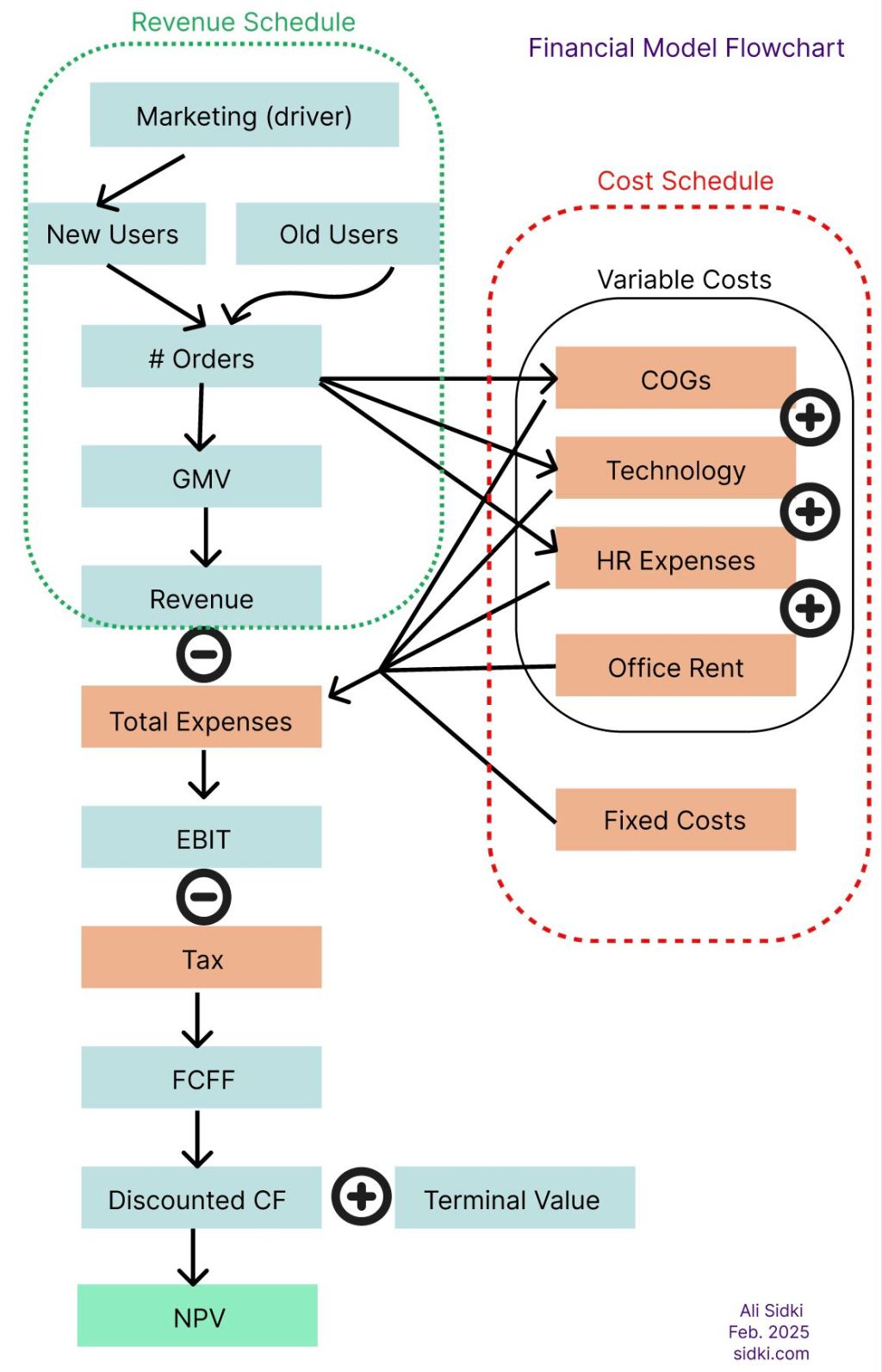
  • Business Drivers in Financial Modeling

    Business Drivers in Financial Modeling

    🎯 Just wrapped up a fascinating startup valuation (post commercialization stage) where marketing spend emerged as the crucial revenue driver.

    Here’s what caught my attention:

    • Direct correlation between marketing budget and customer acquisition

    • Clear impact on revenue growth trajectory

    • Scalable and measurable metrics that investors love

    Instead of traditional metrics like store/branch count or salesforce size, digital-first startups often show stronger ties between marketing spend and revenue generation.

    🎯 The multiplier effect was impressive: $1 in marketing → $4 in revenue (12-month period)

    💡 Key learning: Identifying the right business drivers isn’t just about following industry standards – it’s about understanding what truly moves the needle for YOUR specific business model.

    💭 What’s the most unexpected business driver you’ve encountered in your valuations? Drop your experiences below!

    #Startups #Valuation #FinancialModeling

    #Entrepreneurship #BusinessDevelopment #Investment #PitchingTips #BusinessStrategy #CorporateDevelopment #VentureCapital #StartupGrowth #StartupAdvice

  • Leading VS Trailing KPIs

    Leading VS Trailing KPIs

    🎯 I met with a frustrated early stage founder who was struggling to hit his quarterly targets.

    “I track revenue, profit margins, and customer churn religiously,” he said, “but I don’t feel I am monitoring my business correctly”

    I drew two circles on his whiteboard:

    Circle 1: “Lagging” and put his KPIs of this type (almost all of his KPIs were there)

    Circle 2: “Leading” and it had only one tracked KPI

    “Think of it like your health,” I explained. “Weight is a lagging indicator – you see results after the fact. Daily steps and calories are leading indicators – they predict future outcomes.”

    His eyes lit up. 🔥

    We then built his new KPI Scorecard (EOS style):

    Lagging: Revenue, Profit, Customer Satisfaction

    Leading: • Sales calls/week • Proposal response time • Customer support response rate • Employee engagement scores

    The magic happens when you balance both:

    Lagging KPIs tell you if you won/lost

    Leading KPIs tell you if you’re likely to win/lose

    💡 Pro tip: Aim for a 60/40 split favoring leading indicators in your scorecard. They’re your early warning system.

    What leading indicators are you tracking in your business? Share your thoughts in the comments below! Let’s learn from each other. 👇

    Feel free to share this post with your network.

    #Entrepreneurship #BusinessDevelopment #Investment #PitchingTips #BusinessStrategy #CorporateDevelopment #VentureCapital #StartupGrowth #StartupAdvice

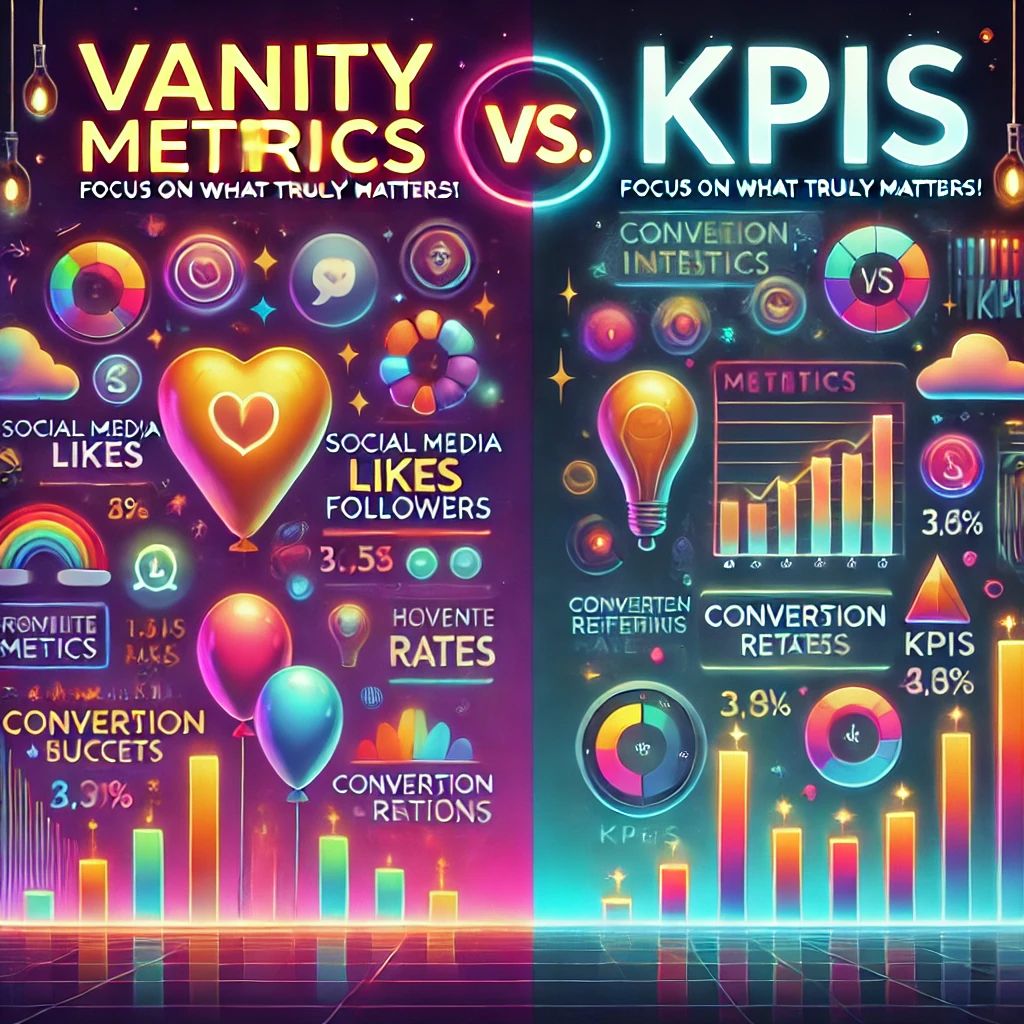
  • Beyond Vanity Metrics: The KPIs That Actually Matter for Early-Stage Startups Seeking Investment 📊

    Beyond Vanity Metrics: The KPIs That Actually Matter for Early-Stage Startups Seeking Investment 📊

    I was engaged with an early-stage founder earlier, and I asked him, “Do you think your startup is successful now?” He said, “Yes! I have 100,000 downloads!”

    After evaluating numerous startups, I’ve noticed a common pattern: founders often focus on the wrong metrics when pitching to investors.

    Here are the metrics that ACTUALLY matter when seeking investment:

    1. Unit Economics 💰

    – Customer Acquisition Cost (CAC)

    – Customer Lifetime Value (LTV)

    – The LTV:CAC ratio is crucial – aim for 3:1 minimum

    2. Revenue Quality 📈

    – Monthly Recurring Revenue (MRR) growth rate / ARR

    – Revenue retention rate

    – Gross margin per customer

    3. Customer Behavior Metrics 🎯

    – Active user retention (not just total user count)

    – Engagement frequency

    – Time to first value (time to first purchase)

    4. Market Validation Indicators 🌍

    – Customer referral rates

    – Conversion rate at each funnel stage

    – Percentage of organic vs. paid acquisition

    🚫 Stop focusing on:

    – App downloads without activation rates

    – Social media followers

    – Total registered users

    – Email list size

    💡 Pro Tip: From my experience leading investment rounds, investors care more about the TRAJECTORY of these metrics than absolute numbers. Show them the STORY behind your growth.

    🔑 Key Takeaway: Focus on metrics that demonstrate sustainable growth and customer value creation. These are the numbers that will actually help you secure investment.

    Feel free to share this post with your network, also if you think there are other examples of useful/useless metrics please share them in the comments.

    #StartupMetrics #Entrepreneurship #CorporateDevelopment #BusinessDevelopment #Investment #VentureCapital #StartupGrowth #StartupAdvice

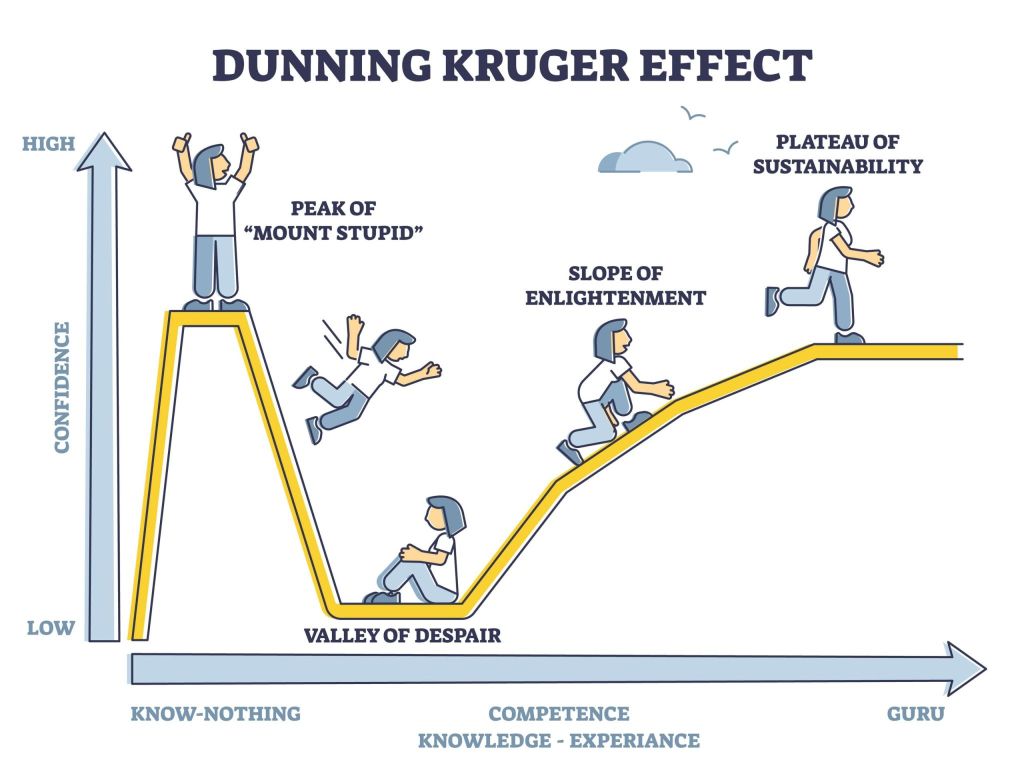
  • Coachability of Business Owners (Dunning-Kruger Effect)

    Coachability of Business Owners (Dunning-Kruger Effect)

    🤔 The “You’re Not Coachable” Talk

    Had an interesting meeting a while ago. A friend connected me with an early-stage founder who was still in the ideation phase. Red flags started popping up immediately.

    Every question I asked was met with “Oh yeah, I already thought of that” or “That won’t be an issue for us.”

    Me: “How will you validate your target market?” Him: “Everyone needs this product, it’s obvious.”

    Me: “What about competitor X?” Him: “They’re doing it wrong. We’ll be different.”

    ❗ Here’s the hard truth: If you think you have all the answers, you’re probably asking the wrong questions.

    ✅ Tips for early-stage founders:

    • Embrace uncertainty – it’s where growth happens

    • Listen more than you speak

    • Write down feedback, even if you disagree

    • Ask “why” instead of defending your position

    • Seek mentors who challenge your assumptions

    The most successful founders I’ve worked with share one trait: intellectual humility.

    💡 Remember: Your idea is just 1% of the journey. The other 99% is learning, adapting, and evolving.

    In my opinion, this is the typical representation of the #Dunning-Kruger Effect

    💭 What’s the best piece of feedback you initially disagreed with but later proved valuable? Share your story below!

    👁️‍🗨️ If you think this is helpful, Feel free to share this post with your network. and follow me for more.

    #Entrepreneurship #BusinessDevelopment #Investment #PitchingTips #BusinessStrategy #CorporateDevelopment #VentureCapital #StartupGrowth #StartupAdvice

  • How to Write a Better Cold Email

    How to Write a Better Cold Email

    A year ago in Jan 2024, Redstone a Berlin-based vc received a cold email inviting them to invest in DeepSeek, they ignored it!

    To be fair the email was generic and unappealing, VCs receive 100s of such emails,

    Few improvements would have made this email much more compelling.

    How to Write a Better Cold Email:

    ✅ Subject: Highlight strongest points “DeepSeek – Backed by [VC Firm], Growing 5X Faster”

    ✅ Personalized Opening: The name of the person, or show information that demonstrates you did your own research “You backing the startups [startup names] show your interest in AI-first startups ”

    ✅ Value Proposition: What makes you unique “DeepSeek is China’s fastest-growing AI search startup, securing [funding] and scaling [growth stat].”

    ✅ Call to Action: A reasonable and clear action, not asking for a lunch meeting but a short online meeting is enough “Would love to share why top investors are betting on this—10 min this week?”

    💡 Pro tip: use the inverted pyramid method in writing emails,

    1. Grabbing attention (Most important info)

    2. Important details

    3. General details

    4. Call to Action

    Cold emails don’t fail because they’re cold. They fail because they’re bad.

    Good emails will not get you funding or the objective you want but they will spark interest and you can continue the conversation.

    Bad emails will get you ignored!

    ⁉️ In your experience, what are good tips for writing an effective email? Share in the comments

    Feel free to share this post with your network.

    #Entrepreneurship #BusinessDevelopment #Investment #PitchingTips #BusinessStrategy #CorporateDevelopment #VentureCapital #StartupGrowth #StartupAdvice

  • Problem Statement Disaster

    Problem Statement Disaster

    A solution to no problem?

    I was in a discussion with an investor the other day at an event, when a founder approached him. The founder eagerly asked to pitch his business idea, and the investor even hinted “Give me your elevator pitch”

    But what followed was… puzzling.

    The founder launched straight into their AI-powered, cutting-edge solution—buzzwords flying left and right. Yet, when they finished, both the investor and I were left wondering:

    What problem is this solving?

    After an awkward pause, The investor had to explicitly ask, “Why exactly will your planned customers need your services?” This was a clear indication that the founder had missed the most crucial part of his pitch.

    This awkward encounter highlighted a common pitfall in startup pitches, but I believe a little preparation goes a long way. Let me share the fundamentals of crafting a compelling problem statement.

    A well-crafted problem statement makes all the difference. Here’s how to get it right:

    ✅ Start with the pain point – What real challenge are your target customers facing? Is it costing them money, time, or peace of mind?

    ✅ Quantify the impact – Use hard data or real examples. Saying, “Businesses lose $X million annually due to this inefficiency” is far more compelling than “Businesses struggle with this issue.”

    ✅ Show the ripple effect – A great problem statement highlights both direct and indirect consequences. How does this issue disrupt broader workflows, profits, or customer satisfaction?

    ✅ Validate market demand – Prove that the problem is widespread. Market research, customer interviews, and industry trends all help build credibility.

    ✅ Explain why now – Timing is everything. What shift—technological, regulatory, or cultural—makes this problem urgent to solve today?

    Investors Don’t Invest in Solutions—They Invest in Problems

    Your AI-powered platform, your proprietary tech stack—all of that should support your problem-solving approach, not be the centerpiece of your pitch.

    As one successful founder once said:

    💡 “Fall in love with the problem, not your solution.”

    What are your thoughts on problem statements? Have you seen (or made) this mistake in pitch meetings?

    Feel free to share this post with your network.

    #Entrepreneurship #BusinessDevelopment #Investment #PitchingTips #BusinessStrategy #CorporateDevelopment #VentureCapital #StartupGrowth #StartupAdvice